


 Crisis Info
 English
 Donate
 Crisis Info
 Sign Up for Emails
- Stress can be internal (racing thoughts, sleep issues) or external (impatience, fatigue), and it affects both physical and mental health.
- Nearly half of all parents feel overwhelmed by stress due to financial concerns, time constraints and worries about their children's needs and development.
- Learning to manage stress benefits both you and your children. And there are steps you can take to reduce stress.
Kids' Mental Health Starts with Us - At Home.
Scroll down for simple ways to parent with less stress and more confidence.
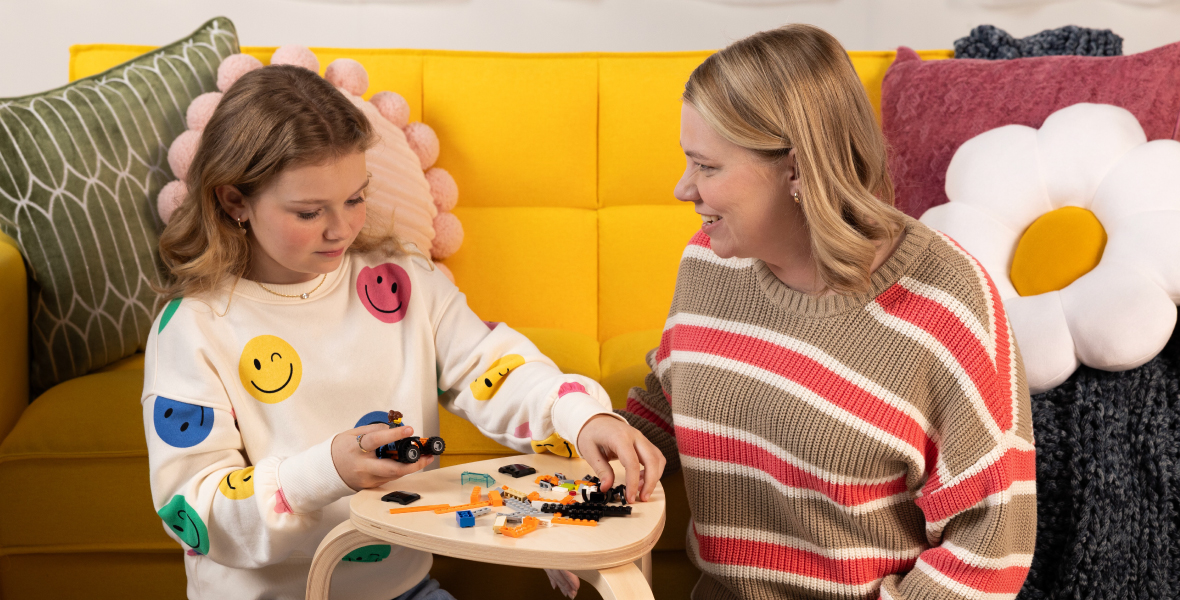
Rising costs, busy schedules and kids’ emotional needs can leave anyone feeling stretched. As parents ourselves, we feel it too.
While we can’t control every stressor outside our homes, we can create a space where kids feel supported and understood. And you feel more in control and calm.
By using small, everyday moments to build confidence, connection and resilience, we can make a lasting impact on our kids’ mental wellness.
We’re in this together.

— Dr. Ariana and Dr. Whitney
Help for Your Parenting Concerns
These tools and resources can help you make your home a place that strengthens everyone.
Article
Activity
5 Steps to Help with Parental Stress

Article
Talking to Kids About Financial Stress and Money Worries
- Children often feel the impact of financial challenges, even if they don’t understand it. Learn how to talk about money worries that supports kids’ emotional well-being and mental health.
- Learn how to choose language, answer questions openly and reassure children that they are safe and not responsible for the situation.
- Ongoing conversations can help kids feel safe and secure during these uncertain times.
Article
”Bad” Behavior? Try Consequences

- Children's behavior is a form of communication; responding appropriately will help you maintain a healthy relationship.
- Consequences should teach and communicate, rather than punish.
- Ignoring attention-seeking or silly behavior can be effective. Address aggressive or dangerous behavior immediately.
- Follow through with stated consequences and offer praise for positive responses to reinforce good behavior.
Article
Activity
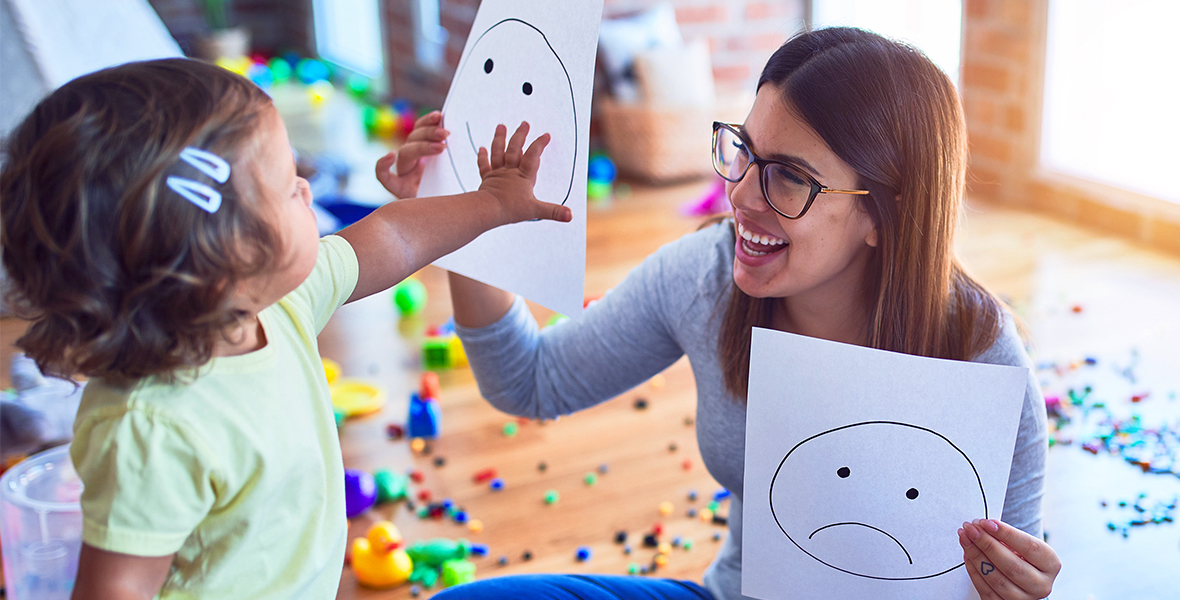
Helping Kids Notice How They Are Feeling

- Many people struggle to recognize emotions as they feel them. Teaching children to notice and understand their feelings can help them manage those feelings.
- Activities like labeling emotions, discussing past situations and noticing facial expressions can help children recognize and express their emotions.
- Teaching kids to notice how emotions feels in their bodies (e.g., butterflies in the stomach when nervous) can help them understand their feelings better.
- Keeping a daily emotions journal may help children track and understand their feelings, promoting better emotional regulation over time.
Article
Activity
Belonging Boosts Kids' Mental Health
- Children who feel connected to their families, schools and neighborhoods experience mental health benefits.
- Feelings of belonging can be increased by modeling healthy relationship skills, providing them with opportunities and considering your child’s unique temperament.
Parent Stress Reset Webinar | May 14, 12 PM EDT
Join us on Thursday, May 14, at noon (ET) for a free, interactive webinar.
Our pediatric psychology experts (who are also parents) show how small changes (based on the things that matter most to you) can make a difference for your whole family. You’ll come out of this session with a few small steps you can take to help your, and your kids’, mental health thrive. You’ll also get a chance to ask questions.
Real Questions from Real Parents
Our experts Dr. Ariana Hoet and Dr. Whitney Raglin Bignall answer your questions! Tap to see their answer.
How can I help kids regulate big emotions without escalating?
The sooner you can recognize that they’re escalating, the better. Validate their feelings. Share your expectations in a neutral tone or give them a space to calm down. Have a conversation afterward.
- If you recognize they’re getting angry, step in before they get to a 10 on the anger scale. Helping them calm down is much easier when they’re at a “3” than a 7.
- Try to be as non-judgmental and calm as possible. You want to validate their feelings. “I can see you’re mad.” “I know it’s tough.” “This isn’t going the way you wanted it to go.”
- You want to find out what’s going on, and if they sense you’re accusing them, it’s likely to increase their frustration. “I can see that you’re frustrated. Please tell me what happened.”
- You also want to clarify expectations in a neutral voice, “I know you’re angry, but we don’t hit.” “We still need to talk respectfully even if we are angry.”
- If they’re escalated, minimize talking and try to stay out of their personal space (while still staying close enough to monitor the situation). If possible, help move them to a quieter space. “Let’s take a walk” or “Can you sit down in the calm down corner?”
If there’s not an immediate safety issue, this is not the time to be overly corrective or shouting commands.
See our Behaviors and Emotions section for more on helping kids who are acting out or having big emotions.
How do I manage stress as a parent and in the workplace?
Take care of yourself and prioritize the things that you find the most important. Not everything is in your control; some things you’ll have to say “No” to. Connect with others and ask for support when you need it.
First, let’s acknowledge parenting is hard. And there’s no such thing as a perfect parent.
You must take care of yourself, even though that usually goes to the bottom of the list.
But you can’t manage everything without any fuel.
Think about what you find important and prioritize those things. Your priorities may not be the same as someone else’s.
Some things will not be able to get your full time and attention; that’s OK. When you feel like you know what matters most to you, it can help you let go of the things that matter the least.
Saying “no” to things that don’t line up with your priorities is OK: even good things for your kids. Consider what matters most to your family.
Support is also important. Connect with other people. Spend time with people because you want to enjoy it. And don’t be afraid to reach out to people because you need help.
You can explore more ways to handle stress and take care of yourself, as well as prioritizing what you and your family values.
How can I help my daughter deal with her big emotions?
Helping her recognize her feelings and that they are OK is a good place to start. When calm, talk with her about how she wants to respond when she’s upset and how she thinks you could help. Work together on a coping toolbox that you can both rely on when emotions get big.
Give her the words for feelings and help her to look for the signs of feelings. “If I’m stomping, or feeling like my face is warm, I’m probably getting angry.” Make sure she understands that all feelings are OK, but what we do with our feelings that can sometimes cause problems.
Then make a coping plan. How would she like to respond when she’s upset or frustrated? How would she like to be supported when she’s feeling that way? One thing you can do is develop a code word, a word that’s private for the two of you. Either of you can use it when she senses she’s getting upset, or you sense that it’s happening. It helps prompt her to use a calm down strategy that you’ve discussed and practiced.
This could be relaxation, movement, creativity or connecting with someone else.
For example, you might say “Code red” and that reminds her to take a breath or go to the calm down corner.
Deep breaths are helpful. But they’re not as effective when feelings are STRONG. If anything, a deep breath might take them from a 10 to a 9.5. Deep breathing is more effective if they’re at a 2 or 4.
Also, avoid saying “Calm down!” It usually increases frustration.
All kids are different. What works for one may not be as effective for another, even siblings who have grown up in the same house.

Get Weekly Mental Health Resources in Your Inbox
Additional Tools for Mental Wellness


Explore KMHF
OR