Crisis Info
 English

 Donate
 Crisis Info
 Sign Up for Emails
Watch the Documentary Short
Watch Now
About the Film
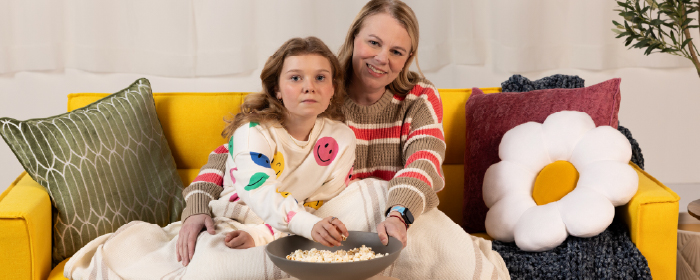
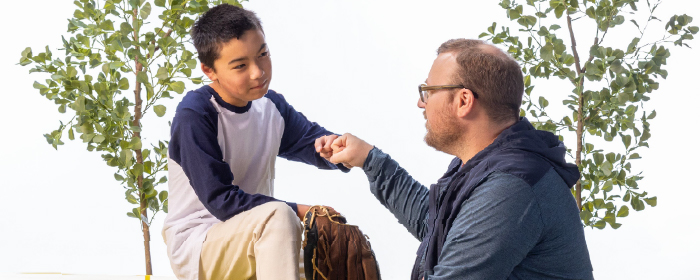
Every child deserves to feel heard and supported. That’s the message behind Kids Mental Health Starts with Us, an awareness campaign from The Kids Mental Health Foundation led by filmmaker, advocate and parent Soleil Moon Frye.
Through a documentary short and national PSA, familiar faces share personal stories to help start honest conversations about kids’ mental health. Their experiences remind us how much connection, compassion and early support matter and that every caring adult can make a difference in a child’s life.
Featured Voices
Thank you to everyone who shared their stories and lent their voices to Kids Mental Health Starts with Us.
- Malin Akerman (Actress)
- David Arquette (Actor)
- Lance Bass (Musician)
- Angel Carter Conrad (Mental Health Advocate)
- Anna Cathcart (Actress)
- Jordan Chiles (Olympic Gymnast)
- Alexandra Daddario (Actress)
- Tyler Davis (NFL Player)
- Ashley Eckstein (Voice of the “Kids Mental Health Starts with Us” campaign)
- Soleil Moon Frye (Filmmaker/Actress)
- Troy Garity (Actor)
- Lucy Hale (Actress)
- Oliver Hudson (Actor)
- Raymond Lee (Actor)
- Lisa Ling (Journalist)
- Christina McLarty (Producer)
- Christian Ramirez (MLS Player)
Directed By Soleil Moon Frye
Director, actor, producer, writer and humanitarian Soleil Moon Frye began her career as a child actor, starring as “Punky” Brewster in the 1984 Primetime Emmy®–nominated sitcom PUNKY BREWSTER. She has since built a critically acclaimed career behind the camera as a filmmaker known for her raw, emotional and empathetic storytelling.
Frye is deeply committed to philanthropy and advocacy and has long used her platform to raise awareness around mental health and emotional well-being. She is actively involved with the Kids Mental Health Foundation as a council member and works to ensure that families and children feel seen, supported and empowered.
Video Transcript
Transcript
This documentary features multiple voices. Speaker names are not identified in this transcript.
Clear slate. Clear slate. Here you go. Yeah. Do it. Take one. Take one. Yeah. Way to go, buddy. Dad's always the last one. That's the last one. Are you guys good? You're good. Fantastic. Here we go. Here we go.
What is it like to be so loved and adored by the world all over?
Well, if we're talking about mental health, it's very good for my mental health.
I'm happy I'm able to speak about it now. If you would have asked me like five, six, seven years ago, I probably would have been looking at you like, uh, I'm good. Like, I'm I don't want to talk about it, but I'm happy I could speak about it now.
Mental health is everywhere. We all have it, whether you call it that or not. And I think just normalizing the conversation opens up a door of safety.
We've been friends for how many years? Over 20 years, probably. Who's counting? We've played cards together. We've worked together. We've laughed together. We've never spoken like this. Right.
Part of my journey into taking care of myself has been to shine a light on it and talk about it.
I grew up with very severe anxiety as a kid. I'm 22 now and I still struggle with anxiety. I started seeing a therapist when I was about nine. I remember telling my mom like, "Don't tell my friend's moms." This is something that's so embarrassing. I wonder how I already had that stigma around therapy as a 9-year-old.
My life has taken me on a bit of a journey. You know, I moved to LA young, grew up quickly, struggled a lot in my 20s with uh alcoholism. Drinking was the first thing I found that kind of turned my brain off and gave me some sort of mental peace.
I think it also ties back to when I was a kid, I repressed a lot of emotions. So, when I found this friend in alcohol, if you will, I felt like it gave me an outlet to express what I was really feeling.
I'm a little over four years sober, so I definitely found a way that works for me. Waking up and liking who I am and knowing that my choices align with my values every day is like such a gift.
I grew up in an extremely non-diverse community. So, our family was one of the very few Asians around. Not a day would go by when a kid didn't just make some kind of rude comment about my about how I looked or my ethnicity. And I would look in the mirror and just wish I looked different and wish I could change how people thought of me or what I looked like. But just knowing that I couldn't, there was a sort of sense of, at least in my environment, you have to be perfect.
That gets extremely exhausting to constantly be worrying about what's wrong with you. Acting class was the only place where I was allowed to cry and scream and explore it darker themes.
There's a part of me that is definitely still the little boy who's seeking acceptance one way or another. The lack of self-love and self-worth, especially growing up in the family that I grew up in. When you've got movie stars and of course Kurt came into my life and made me the man that I am. But when you are comparing yourself, which is one of the worst things you can do, it's easy to go into that black sheep place. That's the cliff notes into my psychology.
You were in a little band, right? Yeah, a little bit.
Well, I was in InSync. I was the in in sync. Uh 16 is when I joined the band, and I was very sheltered kid from Mississippi. Uh, so I had to grow up very fast and I knew at such an early age that I was gay and I was always told that, you know, it was wrong. I didn't know what anxiety was at the time, but looking back, I'm like, oh yeah, I was scared.
I like to sometimes visualize my anxiety as like a little creature tugging out my pant leg trying to get my attention when it's the last thing I want.
It was always like kind of like this dull like, you need to address this. You need to address this. Is there a healthier way to approach these things?
I started seeing a therapist. I started talking about my problems out loud. It allowed me to at least have an awareness and a vocabulary to deal with whatever was ahead.
I watched my mom struggle with mental health issues. We never spoke about it because she didn't really have the tools to speak about it either. So, you just kind of pretended. You put your mask on and you pretended as you went out.
We've gone to therapy and kind of worked through our own stuff. coming back together and having the language, having the tools to talk about it. It's just it's such a a relief now to be able to have open dialogue about it.
My mom went through a really hard childhood and it affected us. My father had a really painful childhood that affected us. Not being able to learn in school and having, you know, ADHD and all these things that dyslexia. Yeah. And dyslexia and not really having, you know, it know what it is at that point. recovering addict. And for a lot of my life, I did self-destructive things. Life's complicated. It's like you grow up and you're like, "What's going on?" You know?
David has found a way to kind of deal with a lot of the mental health struggles he has by pouring himself into art. He's just so creative and whimsical and it makes it so fun.
Kids mental health. My cause, my cleat, and I wore them during the game. Great win. Go round. Let's get it.
You're more than an athlete. You're not going to be an athlete forever, but you are going to be you forever. So, work on you.
I was born to a very intensely engaged family. My father was one of the leaders against the war in Vietnam. Um was a freedom writer in the south. On my mom's side of the family were multiple generations of actors. Something that I have had to deal with my whole life is am I worthy of love.
You get to a point where the pain and suffering can become so unbearable. I think what is being asked of you is to shine a light on the parts of you that need healing.
When you don't know what's happening, you don't know how to ask for help. You feel like you're crazy. You feel like you're the only one in the world who's feeling these things, which is couldn't be further from the truth. It's easy to ask for help when you break a leg. You don't have to ask.
Growing up, it's like if you said that you were seeing a therapist, people would look at you like, "What's wrong with you?" You were embarrassed to talk to tell people you were talking to a doctor.
It's a really brave thing to go to therapy. And it's a really brave commendable thing to be asking for help. I think a lot of kids need to hear that from an adult. Need to hear that from people in their life that like to speak up and to want to do better is actually brave.
Every child deserves to actually show who they are. Anything is possible. You want to become a doctor, go do it. I Yes, bestie. Go do you, right? But also understand that every road isn't perfect.
We live in a life, right? It's a puzzle. We pick up puzzle pieces. We feel them. We see what they're all about. and we try to fit in the perfect spot, but sometimes it doesn't fit. And I think if we allow kids to understand that life isn't going to be perfect, but if you have those people who are around you that can uplift you, it can be a little easier.
We're so scrutinized as athletes that we don't want to have a weakness when in reality being able to understand it and manage it really led to it being a strength, not a weakness. I believe I took my game to another level.
You can have people look at your life and go, "Oh, her life's perfect." Or, "She has this, so therefore she's fine mentally." When the truth is that you don't know what anyone's going through.
Tell me about what Kids Mental Health Foundation means to you.
Since joining Kids Mental Health Foundation, which was after my twin brother Aaron passed away, to be able to put my pain into purpose, it means everything to me.
What I think is so critical is talking, is having a conversation. And what Kids Mental Health Foundation provides in so many ways is a safe place to have those conversations.
I wish that this organization existed when I was a kid, when I was going through those lonely times, that there were these resources that were available to me, that experts knew exactly what I was going through.
At night, I always say affirmations to him and I just tell him, you know, things will be hard, but we're on one big great adventure and know that there's always something great around the corner.
You know, you just want to wrap them in bubble wrap, right? And never let them leave the house, but that's impossible. Our kids now at four, I'm teaching them these tools already. They know to calm down, to take deep breaths. I just want our kids to know that they are perfect as they are. They will always be loved. We will always support them.
I feel like everyone feels so overwhelmed with certain issues, so you have to break it down. And I feel like Kids Mental Health Foundation just breaks it down in a simple way so that you can start somewhere.
What I love so much about the Kids Mental Health Foundation is that their mission statement is weaving mental health into the fabric of kids' lives, reaching kids before something becomes a crisis.
Kids mental health starts with us. Join us in supporting kids mental health at kidsmentalhealthfoundation.org.
I support kids mental health and you can too. You can follow us on Instagram at kids mental health foundation.
For me, supporting kids mental health foundation and being part of it is part of helping the next generation and helping the world.
Find free expert developed tools and resources at kidsmentalhealthfoundation.org.
About the Kids Mental Health Foundation
The Kids Mental Health Foundation is the leading organization promoting mental health for children in the United States. To achieve its vision to build a world where mental health is a vital part of every child’s upbringing, nearly 1,000 mental health professionals and researchers at Nationwide Children’s Hospital, in partnership with other trusted experts, provide real-world knowledge and expertise to power the Foundation’s free educational videos, guides and curriculum. To date, more than 33 million people have engaged with the Foundation’s materials, helping parents, educators and coaches be a guiding force for children all across the United States.