Just learning about having conversations? Our experts recommend reading them in this order:
Starting the conversation with your kids about their thoughts, feelings and experiences may be the easy part.
Now that they’re talking, you may be thinking, "What do I say? How do I react?
These are important questions because our goal is to keep them talking and to create an environment where they will know they can keep coming back to us with any future problems or worries. We have to make talking to the adults rewarding and pleasant!
How Can I Keep Kids Talking?
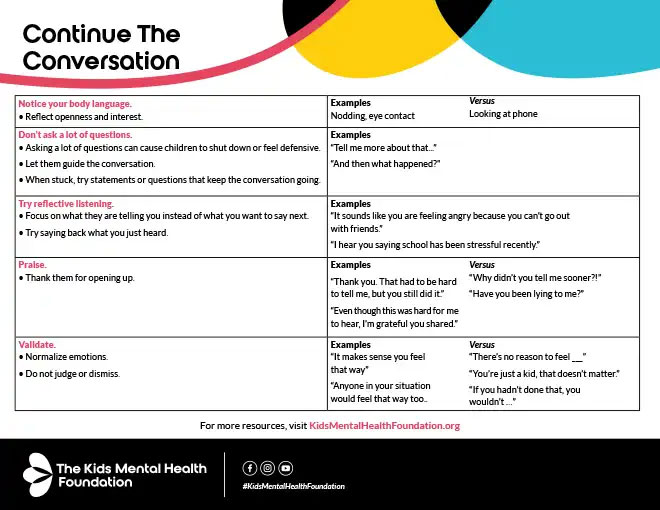
- Notice your body language. As your child starts sharing, check in with yourself. If you are starting to feel upset, angry, or overwhelmed, pause and breathe. Remember this moment is about them, not how you are feeling (that can come later). Use body language that reflects openness and interest, such as nodding and eye contact. Remember, put your devices away.
- Don’t ask a lot of questions. You may have 100 thoughts a minute when your child is sharing something you did not know about or are concerned with. Remember: pause and let them guide the conversation. Asking a lot of questions can cause children to shut down or feel defensive. If the conversation gets stuck, you can try questions or statements such as:
- "And then what happened?" or
- "Tell me more about that..."
- Try reflective listening. Focus on what they are telling you instead of what you want to say next. Then repeat back what you just heard your child say (called reflective listening). This skill takes practice!
- For example: "It sounds like you are feeling angry because you can’t go out with friends" or "I hear you saying school has been stressful recently."
This allows your child to know you are truly listening, to clarify if that is incorrect, and to continue adding to the conversation without you having to ask questions.
- Normalize emotions and do not judge or dismiss what your child is sharing. You can talk about situations in which you have felt the same or discuss role models who have gone through difficult situations. Statements such as "anyone in your situation would feel that way too..." can be confirming and relieving for children to hear.
- Avoid statements such as "There is no reason to feel that way."
- Also try not to place blame with statements like, "If you had not done that, you wouldn’t …"
- Take breaks. For difficult conversations, strong emotions may happen. Give yourself or your child a break, if needed. No one should feel forced to talk if they are feeling overwhelmed. Sometimes having a silly code word that shows a break is needed can help lighten the mood and remind everyone involved to pause. Pick a determined amount of time for the break and return to the conversation.
- Thank them for sharing. As much as we wish this was different, children do not have to share anything with us if they do not want to. So, when they do open up, thank them for choosing to do so!
- Praise can help them feel good about sharing and then they are more likely to do it again in the future.
| SAY THIS |
NOT THAT |
|
"Thank you. That had to be hard to tell me, but you still did."
"That was brave of you to share. Thank you."
This helps you sound curious.
|
"Why didn’t you tell me sooner?"
|
Remember, if this conversation goes well, they are more likely to tell you sooner the next time a difficult situation comes up.
Now that you know how to start the conversation and keep the conversation going, it’s time for the tough part: sharing your questions, concerns, and advice while having your children be open to it and maintain a good relationship.
Download Our Keeping the Conversation Going Tip Sheet!
Once kids start talking about their thoughts, feelings and experiences, what do you say? How do you react? Check out our downloadable tip sheet for a quick reference guide.


 Crisis Info
 English
 Donate
 Crisis Info
 Sign Up for Emails
 Copy Link