


 Crisis Info
 English
 Donate
 Crisis Info
 Sign Up for Emails
 Copy Link
- Getting to know your class and encouraging students to get to know one another can improve classroom belonging.
- Asking open-ended questions can be a great way to get everyone to share.
- While you can encourage all students to participate, try to avoid making a student answer a question they’re not comfortable with.
July 2026
How to Help Your Child Manage School Stress

Nakeia Hudson, LISW-S, MBA; Ariana Hoet, PhD
Article Summary
- You can teach simple academic skills to reduce school stress, such as staying organized, managing time and breaking tasks into smaller steps.
- Signs that your child is overwhelmed can include avoiding homework and frequent complaints about school.
- Partner with teachers, social workers, counselors or mental health counselors for additional support.
Activity
Across the U.S., many children are saying they are stressed about school.
Nearly 75% of high schoolers and 50% of middle schoolers feel constantly stressed by schoolwork, according to a survey by the American Psychological Association.
And when kids are overwhelmed by school or struggle to keep up with assignments, it affects their mental health and their confidence, potentially leading to poor academic outcomes.
While helping a child learn to manage stress and care for their mental health is an important part of student success, sometimes one of the best things adults can do is teach them tools for managing school to help empower them, decrease that stress and feel control of their school day.
What are signs that my child is stressed and struggling in school?
School stress can show up in different ways. Watch for signs like:
- Avoiding school or homework
- Declining grades
- Trouble making friends at school
- Having frequent headaches or stomachaches
- Trouble sleeping
- Irritability or having emotional outbursts
How can I help my child be more successful in school?
Many times, a child needs to be taught how to manage school expectations. You play an important role in helping your child build habits that support both learning and well-being.
Here are practical ways you can help:
- Build routines. Consistent schedules for homework, meals and sleep reduce stress and improve focus.
Encourage kids to do their homework at the same time every day. It can look different for each child. For example, finishing homework right after school may work for one child, but another child may need a break and a snack first!
- Encourage organization. When kids feel organized, they often feel calmer and more prepared.
- Elementary students may do best with one folder to keep all their work in one place.
- Middle and high school students may need multiple folders or a binder with dividers for each subject.
- As kids get older, they may also need support creating digital folders for each subject in school.
- If possible, give them a consistent space at home where they can keep their school materials, so they don’t have to search for what they need or lose their assignments.
- Teach time management. Planning ahead with assignments and deadlines can help keep track of assignments and decrease the last-minute stress of getting assignments done.
- Elementary kids may benefit from a calendar on their wall.
- Middle and high schoolers may benefit from using a planner or digital app that helps with tracking tasks and deadlines.
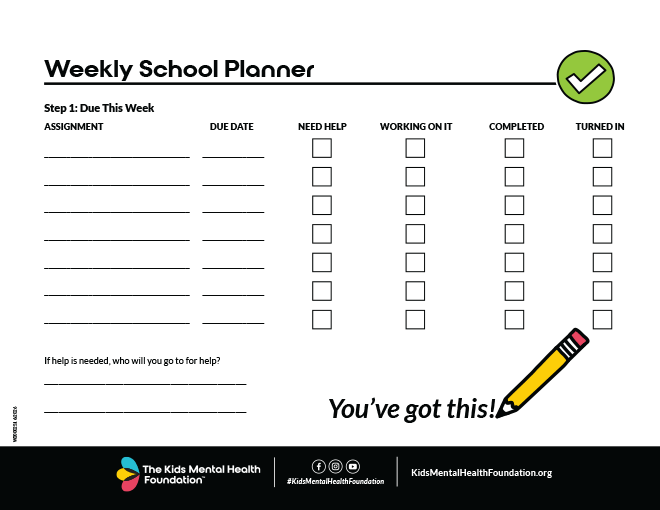
Bonus Tip: Make checking the calendar or planner a part of their routine so they aren’t surprised by any assignments. Use our download below to help them keep track of what school assignments need to be done and turned in.
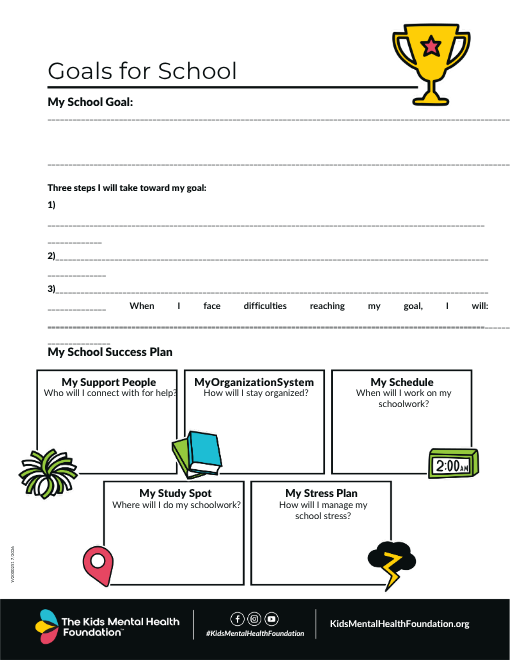
- Support goal setting. Sometimes assignments can feel too big and children freeze because of the stress. Break work into smaller steps to make it feel more doable. Our download below can help you talk with kids about what their school goals are.
For example, if a child needs to read a 100-page book, they may feel it’s too hard and avoid it. But if you help them break it down to 10 pages a day for the next 10 days, that helps them take the first step forward.
Then, you can celebrate progress along the way!
Bonus Tip: Don’t forget to encourage them to add this plan to their planners or calendars!
- Help your child build healthy study habits. Good study habits make learning easier and less frustrating.
- Create a quiet, distraction- and screen-free space where they can study.
- Encourage reviewing notes regularly and trying strategies that aren’t just reading, such as creating flashcards.
- Consider breaks. Breaks can be an important part of learning. They help recharge and improve focus for some kids. Some children may need more frequent breaks than others. Some children may not need breaks at all!
- For example, you could encourage a 5-minute break every 30 minutes or a 10-minute break every set of math problems completed.
- Brainstorm activities with them that they find relaxing. It might be something active like playing outside or something more soothing like drawing or working on a craft.
- Encourage your child to ask for help. Some kids try to do everything on their own. Then, they sit with their frustration for long periods of time, which only grows negative feelings and causes them to fall even more behind!
- Talk with your child about which adults they feel comfortable getting support from.
- Encourage them to ask questions as soon as they feel stuck.
When should I get extra support for my child?
If your child continues to feel overwhelmed and stressed for several weeks or is struggling across multiple classes, this may indicate concerns for a learning disability or a mental health disorder.
- If you are worried about their learning, speak to their teacher or school counselor. Working together as a team with the school is important for student success.
- If you have concerns about their mental health, for example anxiety or depression, seek support from a mental health professional.
- We also have resources that help children who may be experiencing bullying, difficulty making friends, or feeling like they don’t belong.
Your support makes a difference
Helping your child manage school stress doesn’t mean removing challenges. It means giving them the tools and support they need. When children have the tools to manage stress, stay organized and feel supported, they are more confident and capable learners.
If your child is struggling, start small! One routine, one new habit or one conversation can make a difference.
Student success isn’t just about doing well today. It’s about preparing your child for the future. And with your support, they can thrive both in school and in life.
Activities
References:
Collaborative for Academic, Social, and Emotional Learning (CASEL). What Does the Research Say? Hundreds of independent studies confirm: SEL benefits students. CASEL. Accessed May 2026.
American Psychological Association. Promoting Mental Health and Academic Success: Leveraging Lessons from the COVID-19 Pandemic for Educators. American Psychological Association. Accessed May 2026.
Centers for Disease Control and Prevention (CDC). December 2023. Promoting Mental Health and Well-Being in Schools: An Action Guide for School and District Leaders. Centers for Disease Control and Prevention. Accessed May 2026.
National Association of School Psychologists (2020). Research Summaries: The Relationship Between Mental Health and Academic Achievement. National Association of School Psychologists. Accessed May 2026.
The Annie E. Casey Foundation. July 2025. The Role of Parental Involvement in Your Child's Education. The Annie E. Casey Foundation. Accessed May 2026.


Related Articles
Article
Activity
Classroom Conversation Starters

Article
Day Time Break Resources

Nina and Ryan Day know that keeping our brain in shape is just as important as physical fitness. Their Day Time Break program encourages mental wellness for students sixth through eighth grade to help students boost mental wellbeing.
Article
Ideas for Self-Care
Educators face emotional burdens, stress, and burnout. Prioritize self-care, seek help when needed, and draw strength from student resilience.
Article
Activity
Helping Kids with Test Anxiety
- Test anxiety impacts many kids and can cause physical symptoms (like nausea or headaches), trouble focusing or wanting to avoid the test. It’s more common in kids with learning challenges, mental health conditions or perfectionist tendencies.
- Learn about four ways to help a child with test anxiety by talking to them, establishing a plan, strategizing relaxation methods and challenging thoughts.
- On the day of a test, take a few minutes to review the plan, remind them of the calming tools they have practiced and offer encouragement. The goal is to build confidence and resilience.
Article
Activity
How Do I Partner with My Child’s School?
- There are lots of staff at school; it can be confusing to know who to talk to about what.
- You can connect with your child’s teacher or other staff as needed to help you support your child’s academic and behavioral challenges.
- Learn about tools that can help encourage good behavior with praise or rewards that are more effective when teachers and caregivers use them consistently.
Article
How to Talk to Your Child About School Safety

- Talk with your child often using open-ended questions to understand their thoughts and fears about school safety. Let them guide the conversation so that they feel heard and supported.
- Discuss the purpose of lockdown drills in a calm, reassuring way, comparing them to fire drills. After a lockdown drill at their school, ask about how they felt and offer comfort, while respecting their desire to talk — or not.
- When school violence is in the news, limit media exposure, maintain routines and remind them of the safety measures at their school.
Explore KMHF
OR