


 Crisis Info
 English
 Donate
 Crisis Info
 Sign Up for Emails
 Copy Link
- Body positivity is about self-positivity, acceptance, health and identifying people by their strengths and non-physical characteristics.
- It is important to discuss body positivity with children as they continue to be exposed to the portrayal of unrealistic expectations on social media.
- You can engage in positive body talk by appreciating the body for how it functions and speaking kindly about yourself and others.
January 2026
Common Eating Disorders that Impact Children

Erin McTiernan, PsyD
Article Summary
- Eating disorders are psychological conditions that have physical and emotional consequences.
- It is important to learn about different kinds of eating disorders to take the right steps to support your child.
- You can help children have a healthy relationship with food and their body
What are eating disorders?
Eating disorders are mental health conditions that disrupt a child’s relationship with food and eating. They often involve distressing thoughts about weight, shape or control. They can interfere with growth, development, mood, concentration and physical health. Eating disorders can affect children of all body sizes, genders, races and backgrounds.
Eating disorders can be difficult to recognize in children. Changes in eating or weight may be mistaken for growth spurts, increased activity, picky eating or normal experimentation with food choices. By learning more about eating disorders, you can take the right steps to respond early and get appropriate support.
What are common eating disorders?
Anorexia Nervosa (AN)
Anorexia nervosa involves restricting the amount or variety of food eaten, leading to weight that is below what is expected for a child’s age, height, and growth history. Children with AN often have an intense fear of weight gain and a distorted view of their body.
Children who are or were previously in larger bodies may experience delayed diagnosis. Even with significant weight loss, they may not appear underweight, and early weight loss is sometimes praised. This delay in diagnosis can also delay treatment and increase medical risk.
Bulimia Nervosa (BN)
Bulimia nervosa Involves recurrent binge eating episodes followed by behaviors intended to prevent weight gain. These behaviors can include vomiting, using laxatives or diuretics, fasting, or exercising excessively, and they occur at least once per week for three months.
Children with BN may maintain a weight that appears typical, which can make the disorder harder to detect.
Binge Eating Disorder (BED)
Binge eating disorder is the most common eating disorder. It involves episodes of eating a much larger amount of food than typical in a short amount of time, along with a feeling of loss of control. Episodes happen at least once per week for three months. Because kids can feel shame about their binge episodes, eating may be done in secret or late at night, or evidence of a binge may be hidden. Unlike AN or BN, BED does not involve regular behaviors such as vomiting, misusing laxatives, or exercising excessively.
BED affects all genders and racial and ethnic groups. Research shows it can be associated with developing depression, anxiety and/or substance use later.
Avoidant/Restrictive Food Intake Disorder (ARFID)
ARFID involves restrictive eating that is not driven by body image concerns. Children with ARFID may avoid foods due to sensory sensitivity (taste, texture, smell), fear of choking or vomiting, or low interest in eating. This restriction can lead to weight loss, poor growth, nutritional deficiencies or reliance on supplements.
ARFID is different from traditional picky eating because it interferes with health, growth or daily functioning.
What are the warning signs of eating disorders?
Every eating disorder looks different, but possible warning signs include behaviors that persist or worsen over time, including:
- Avoiding certain foods or food groups
- Spending a lot of time in front of the mirror or checking appearance
- Excessively focusing on body shape or weight (frequent weighing)
- Exercising to an extreme degree
- Making frequent comparisons to others
- Changes in mood, irritability, or social withdrawal
- Shame, guilt, or distress related to eating
- Feeling shame or embarrassment around foods they eat
- Eating alone, in secret or disappearing after meals
- Making comments like, “I’m full,” “I’m not hungry,” or “I just ate.”
- Increased focus on nutrition facts, calories or ingredients
What should I do to prevent an eating disorder in my child?
Help your child develop a healthy relationship with food and their body:
- Develop routines with regular meals and snacks throughout the day. Help your child prepare adequate, well-balanced meals. Incorporate a variety of foods into your child’s diet. Enjoy meals together as a family.
- Discuss the importance of food: energy for a big game, connection during the holidays, or celebration of cultural traditions.
- Notice how you talk about food. Avoid labeling foods as “good” or “bad.” Statements like, “Eating late at night makes you gain weight,” or “Are you sure you want to eat that donut? It’s full of sugar!” can make children more anxious about food.
- Model positive self-talk around body image. Instead of criticizing aspects of your own body, of your child’s body, or of other people’s bodies, talk about your favorite thing about your body. Help your child notice their favorite aspects of their body, such as, “My legs are strong and allow me to run fast” or “I like how my hair looks in braids.”
What should I do if I’m worried my child has an eating disorder?
- Start a conversation with your child privately and away from distractions. Download our conversation starters below. Use open-ended questions and listen.
- Sit with your child during meals to provide supervision and support.
- Talk with your child’s school to ensure they are eating lunch.
- Monitor your child’s social media use, especially content related to dieting or fitness.
- Call your child’s pediatrician and share your concerns with them.
- Set up an appointment with a therapist or counselor.
Early support and intervention can make a meaningful difference in recovery. You can make a difference in the lives of the children you care about.
Activities
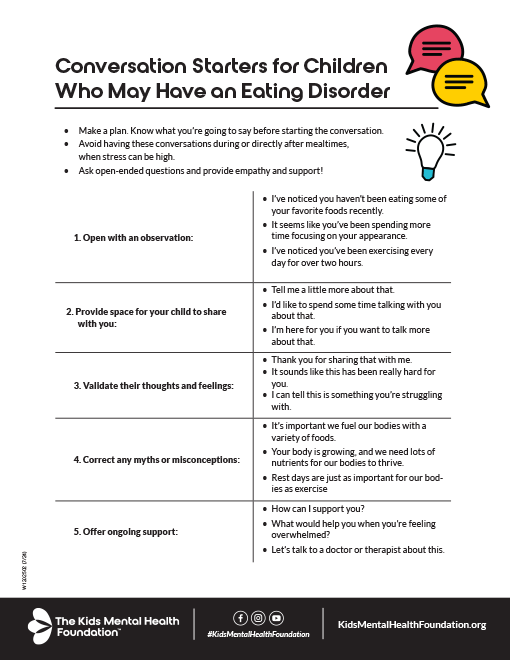
Resources and References
National Eating Disorders Association (NEDA)
Academy for Eating Disorders (AED)
Hornberger LL. Lane MA. The Committee on Adolescence; The American Academy of Pediatrics. Identification and Management of Eating Disorders in Children and Adolescents. Pediatrics (2021) 147 (1).


Related Articles
Article
How to Promote Body Positivity in Kids
Article
Healthy Body Image in Student-Athletes
- Kids can pick up on adult attitudes toward food and their bodies and that can impact a child’s mental health.
- Adults can help children have positive views of healthy eating, activity and exercise.
- Learn about warning signs that an athlete may have unhealthy eating or exercise patterns. Early treatment can be effective.
Article
Activity
Talking to Kids About Food and Their Bodies
- It is important to talk with your child about food choices and body image in a way that isn’t damaging to their mental health.
- You can start by observing your own relationship with food and your body and talking about food as fuel for our bodies.
- You can model healthy relationships with food and body image by focusing on health rather than weight and speaking positively about your body and all bodies.
Explore KMHF
OR